
Understanding the difference between retail and apparel industry is essential for brands, startups, wholesalers, and manufacturers who want to scale in the fashion world. While both industries are deeply connected, they are not the same. Retail focuses on selling ready-made products to consumers, while the apparel industry focuses on designing, producing, and supplying clothing.
In this complete guide, MY APPAREL MANUFACTURER — one of the best garment manufacturers in China and a trusted name in global apparel production — explains everything from industry definitions and product flow to business models, supply chains, real-life partnership scenarios, and future trends.
1. What Defines the Apparel Industry vs. the Retail Industry?
Before diving deep, let’s explore the core meaning of both sectors using the provided keywords.
Retail Industry Meaning
The retail industry includes all businesses involved in selling finished clothing to end consumers. This sector focuses on:
- Retail merchandising
- Retail store operations
- Retail distribution channels
- Retail business model
- Retail management
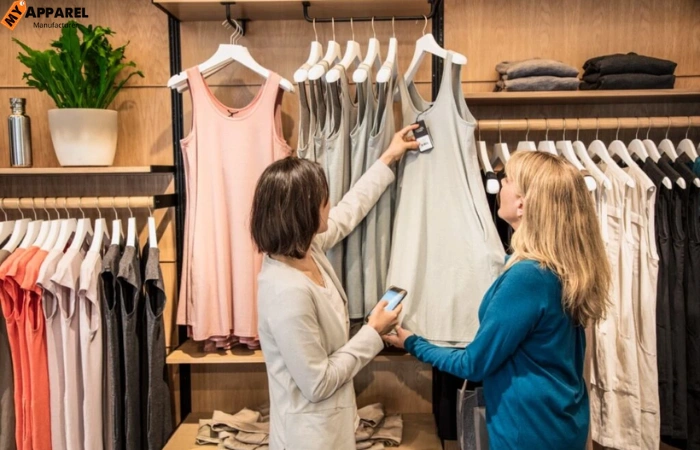
Retail includes supermarkets, fashion stores, boutiques, eCommerce stores, online marketplaces, and chain outlets. The priority of retail is customer experience, pricing, trends, and sales.
Apparel Industry Meaning
The apparel industry includes all companies that design, develop, and manufacture clothing. This sector handles:
- Apparel production process
- Apparel supply chain
- Apparel business model
- Apparel distribution channels
- Apparel industry overview
The apparel industry includes fabric suppliers, cut-and-sew manufacturers, OEM/ODM factories, pattern makers, dyeing units, stitching facilities, and quality control teams.
Retail vs Apparel Industry (Simple Breakdown)
| Factor | Retail Industry | Apparel Industry |
| Focus | Selling clothes | Making clothes |
| Customers | End consumers | Retailers, brands, wholesalers |
| Profit Model | Retail markup | Manufacturing profit margin |
| Activities | Sales & marketing | Production & sourcing |
| Inventory | Finished goods | Raw materials + finished goods |
This clearly shows why retail and apparel industry difference explained is vital for new brands.
2. What Is the Definition and Role of an Apparel Manufacturer?
An apparel manufacturer like MY APPAREL MANUFACTURER plays a central role in the global fashion supply chain.
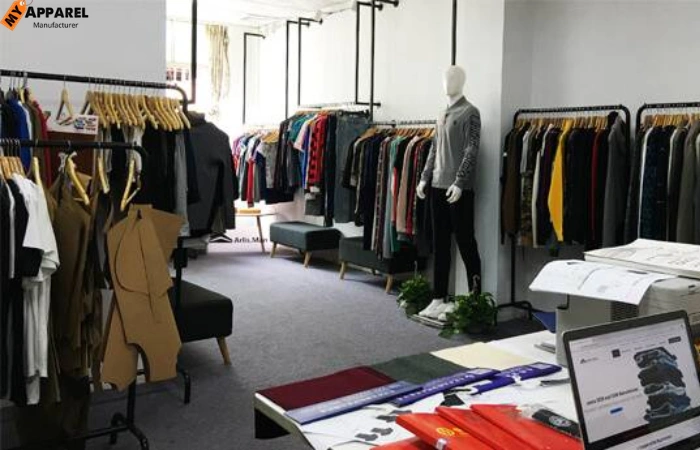
What Manufacturers Do
- Convert fabric into wearable clothing
- Offer cut-and-sew services
- Handle pattern making, grading, and sampling
- Manage sourcing and fabric selection
- Produce garments through a structured apparel manufacturing process
- Ship bulk orders to retailers or brand warehouses
Apparel Manufacturer vs Retailer
An apparel manufacturer creates the product.
A retailer sells the product.
Why Manufacturers Matter
Manufacturers affect:
- Apparel profitability
- Clothing production cost breakdown
- Retail pricing
- Fashion supply chain differences
Without manufacturers, retail has nothing to sell.
3. How Do Products Flow from Apparel Manufacturers to Retailers?
Understanding the retail supply chain vs apparel supply chain helps businesses track cost, quality, and timelines.
Apparel Supply Chain (How Clothes Are Made)
- Fabric sourcing
- Pattern making
- Sampling and approvals
- Cutting
- Sewing
- QC and finishing
- Packing
- Shipping to brand/retailer
Retail Supply Chain (How Clothes Reach Consumers)
- Buying and procurement
- Warehousing
- Merchandising
- Pricing
- Display and sales
- Delivery to customers
The two supply chains connect when retailers purchase inventory directly from manufacturers like MY APPAREL MANUFACTURER.
Retail Buying vs Apparel Sourcing
- Retail buying focuses on trends, quantities, margins.
- Apparel sourcing focuses on fabric quality, production cost, factory capability.
4. What Are the Main Business Models in the Apparel and Retail Industries?
The fashion world operates on various models. Understanding them helps brands choose their structure.

Apparel Business Model
- OEM (Original Equipment Manufacturer)
Manufacturer makes products based on client’s tech packs. - ODM (Original Design Manufacturer)
Manufacturer provides ready-made designs. - Private Label Clothing Production
Retailers sell clothing with their own branding through manufacturers like MY APPAREL MANUFACTURER. - Cut and Sew Manufacturing
Fully custom designs created from scratch.
Retail Business Model
- Brick-and-Mortar Retail
Physical fashion stores and clothing outlets. - Online Retail (eCommerce)
Shopify, Amazon, websites. - Wholesale Retail
Buying in bulk at low prices and reselling. - Fast Fashion Retail
Trend-focused, rapid inventory rotation.
Clothing Retail vs Clothing Manufacturing
| Clothing Retail | Clothing Manufacturing |
| Focuses on selling | Focuses on creating clothing |
| Higher markup | Lower production cost-based profit |
| Customer service oriented | Production efficiency oriented |
5. How Do Industry Trends and Technology Impact Apparel Manufacturing and Retail?
The industries constantly evolve due to changes in consumer preferences and technology.
Retail Trends 2025
- AI-driven personalization
- Virtual try-ons
- Omnichannel retail
- Sustainable fashion demand
- Same-day delivery expectations
Apparel Industry Trends 2025
- Automation in stitching
- Digital patterns and 3D sampling
- Smart inventory forecasting
- Sustainable production processes
- Nearshoring for faster delivery
Fashion Industry Explained
The fashion industry is a giant ecosystem where:
- Apparel industry makes the product
- Retail industry sells it
- Trends influence both sectors
- Technology improves efficiency
6. Real-Life Scenarios: Navigating Apparel & Retail Partnerships
Here’s how a smooth partnership works between retailers and manufacturers like MY APPAREL MANUFACTURER.
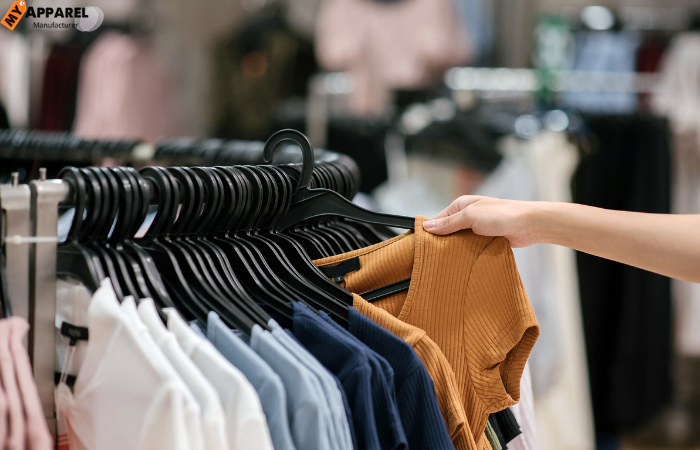
Scenario 1: Private Label Clothing Brand
A startup launches a clothing label. They need:
- Apparel sourcing
- Custom patterns
- High-quality manufacturing
MY APPAREL MANUFACTURER handles production, and the retailer focuses on marketing and sales.
Scenario 2: Retail Chain Buying in Bulk
A chain clothing store wants low-cost, high-quality products.
They rely on:
- Manufacturing cost control
- Apparel supply chain management
- Predictable lead times
Scenario 3: eCommerce Brand Scaling Fast
The brand needs:
- Faster production
- Reliable sizing
- Strong QC
Manufacturing + retail integration leads to long-term success.
7. Conclusion
The difference between retail and apparel industry is simple yet significant:
- Apparel industry designs and manufactures the clothing.
- Retail industry sells the finished clothing to consumers.
Both sectors rely on each other, but they operate under very different systems, supply chains, and business models.
Whether you are a new brand, retailer, or entrepreneur, working with a reliable factory like MY APPAREL MANUFACTURER ensures smoother operations, higher profits, and long-term growth.