

A bulk apparel order is a big decision, financially, logistically, and for your brand’s reputation.
Once production begins, changing your mind is costly. Once your goods are shipped, disputing any quality issues from overseas is a slow and futile process. And once your goods arrive, what’s in those boxes is what you’re selling.
So, what you do before you place your order is more important than most brands realize.
The brands that get good results from their manufacturers aren’t just lucky. They’re simply asking the right questions. They’re getting clarity on paper. They’re not assuming that just because they’ve discussed something, they agree.
Regardless of whether this is your first time working with a manufacturer or a new order with a factory you’ve worked with before, these 10 questions should always be discussed during your bulk order conversation.
Question 1: What Exactly Is Included in Your Price?
Price quotes can be deceptively simple on the surface. A per-unit cost that looks competitive might not include fabric, trims, packaging, or labeling — expenses that add up fast.
Before you accept any quote, ask the manufacturer to itemize what’s covered. Does the price include fabric sourcing, or is that billed separately? Are custom labels, hang tags, and poly bags included, or are those additional line items? What about shipping to the port?
A transparent factory will break this down without hesitation. One that’s vague about what’s included in the quote will often be vague about costs in general — and you’ll find out what wasn’t included when the final invoice arrives.
What to confirm: Request a full cost breakdown — fabric, CMT (cut, make, trim), labels, packaging, and any additional charges — before signing off on production.
Question 2: What Is Your Actual Production Capacity Right Now?
A factory’s theoretical capacity and its available capacity in your production window are two very different numbers.
A factory might be capable of producing 50,000 units per month — but if they’re already committed to three other brands during the period you need production, your order could be delayed or deprioritized without warning.
Ask specifically about their current order load and when they can realistically start your production. Ask whether your order would run on dedicated lines or be scheduled alongside other clients. For time-sensitive orders — seasonal collections, event-specific merchandise, retail launches — this question is non-negotiable.
What to confirm: Get a confirmed production start date and completion date in writing, along with an understanding of what their current workload looks like.
Question 3: Who Is Actually Making My Order?
This question matters more to most buyers than they think.
Some manufacturers accept your order and then subcontract production — or parts of it — to other factories without telling you. This is common in certain segments of the industry, and it creates real problems: the quality standards you evaluated aren’t necessarily the ones being applied, the factory you vetted isn’t the one making your garments, and if issues arise, accountability becomes blurry fast.
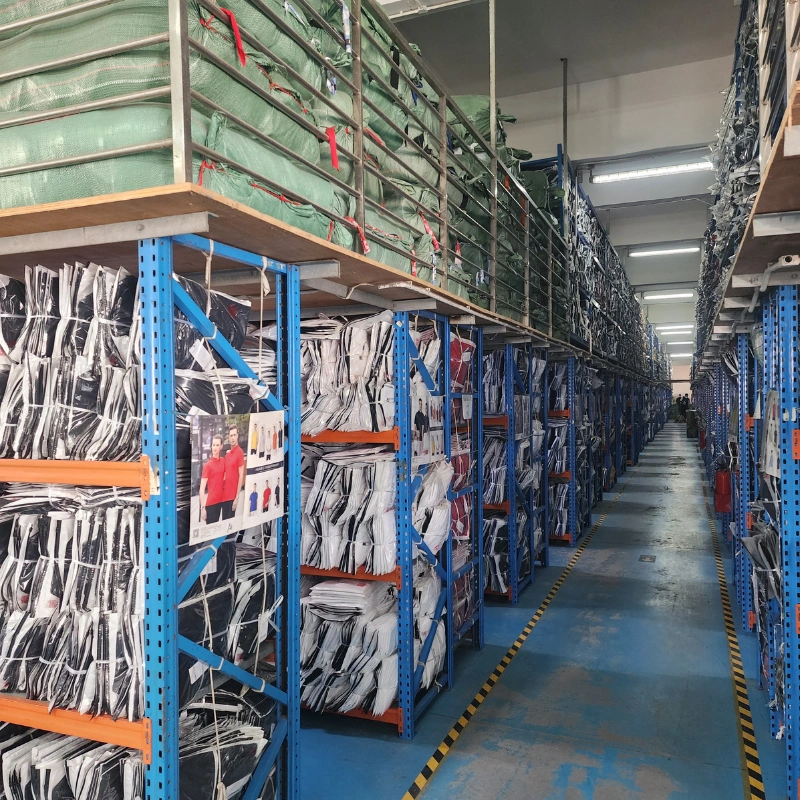
Ask directly whether all production will be done in-house or whether any part of the order will be subcontracted. Ask whether the sampling will be done in the same facility as the bulk production, because sometimes samples are made carefully in-house while bulk gets handed off.
What to confirm: Get a clear commitment that your order will be produced at the facility you’ve agreed to work with, and that no subcontracting will happen without your prior approval.
Question 4: How Do You Handle Quality Control?
Every manufacturer will tell you their quality is good. That’s not useful information.
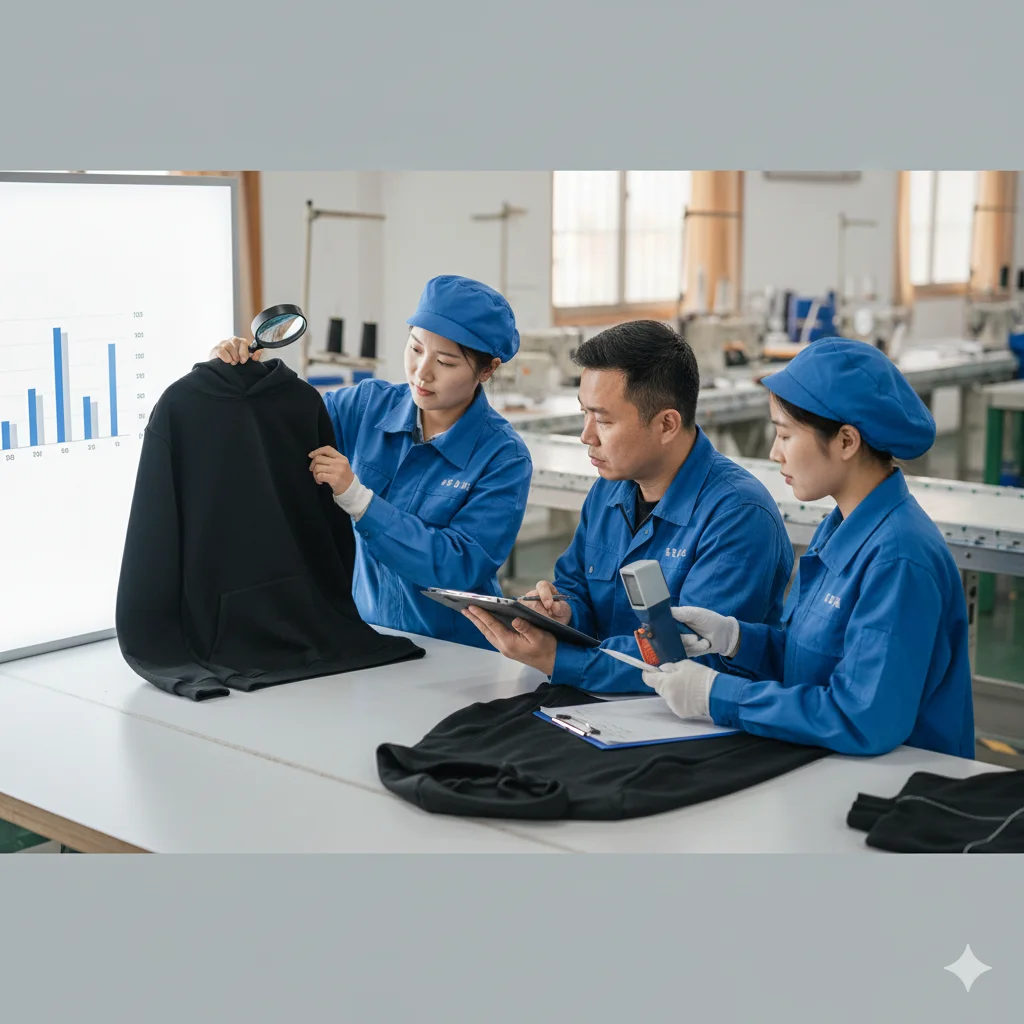
What you actually want to know is how they ensure quality — the specific process, not the assurance. Do they conduct in-line inspections during production, or only check finished goods at the end? Do they measure garments against your approved spec sheet? What is their acceptable defect rate? Do they allow independent third-party inspection?
A factory with a real QC process can describe it in detail. A factory that relies on “our workers are very experienced” as a quality guarantee is telling you, indirectly, that there is no structured process.
What to confirm: Ask them to walk you through their QC steps from start to finish. Request that measurement and inspection reports be provided with your shipment.
Question 5: What Happens If Part of the Order Has Defects?
This is a question many buyers skip because they don’t want to seem pessimistic. That’s a mistake.
Defects happen. Even good factories occasionally produce units that don’t meet spec. What separates reliable factories from unreliable ones isn’t whether defects ever occur — it’s how they respond when they do.
Ask specifically: if 5% of my order is defective, what is your process? Do you replace the units, issue a credit, or repair them? What if the defect rate is higher? What documentation do you require from the buyer to process a claim? What is the timeline for resolution?
A factory that has a clear, fair answer to this question is one that takes post-shipment accountability seriously. A factory that gets defensive or vague when you ask is telling you something important.
What to confirm: Get their defect policy in writing before production begins. Understand the threshold, the resolution process, and the timeline.
Question 6: What Is Your Sampling Process Before Bulk?
If you’re not encouraged to sample for any reason, it’s time to walk away. Sampling is where misunderstandings between your spec and the factory’s interpretation get cleared up. It’s much cheaper to resolve a problem at the sampling phase than to receive 1,000 pieces with the same problem.
Ask how many sampling phases are standard. Ask how long each sampling phase takes. Ask if the sample is made using the same fabric as the production pieces, rather than using ‘substitution’ fabrics. Ask if your sample is filed as a standard throughout the production process.
What to ask: Confirm if production will be made to match your sample, and if your sample is filed as a standard throughout production.
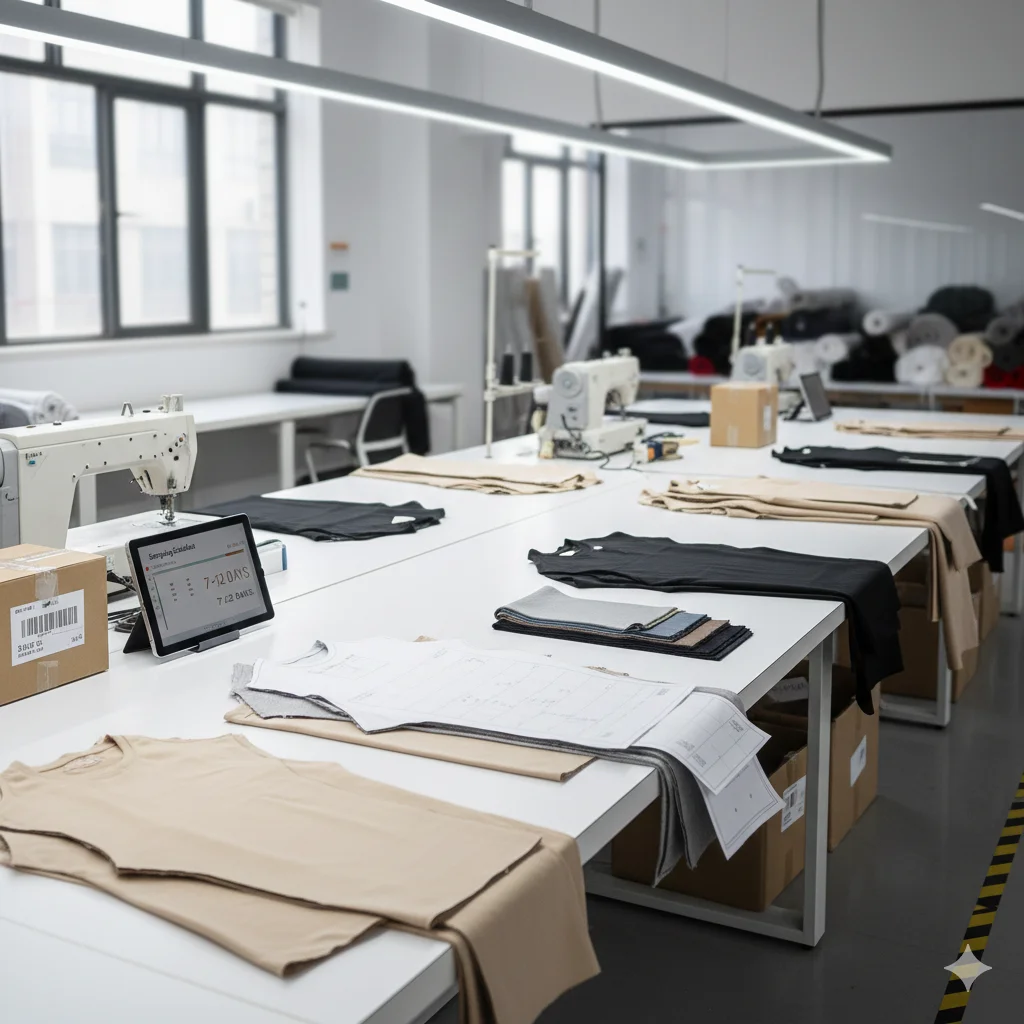
Question 7: What Are Your Lead Times — Realistically?
Lead time is probably the most frequently misquoted figure in the fashion industry.
The factories understand that the brands are working towards tight deadlines – a trade show, a website launch, a retail delivery date. Some factories will misquote a tight lead time to win the business and then adjust expectations (poorly) once the order has been placed.
Request their realistic lead time for your type and quantity of order. Request what might impact their lead time – fabric procurement, holidays, production schedule. Request their on-time delivery rate. Request what happens if they do not deliver on time.
What to check: Request a production schedule in writing with target dates – approval of fabrics, completion of samples, start of production, end of production, and ship date.
Question 8: How Do You Communicate During Production?
Once your order is in production, you need to know what’s happening — not just when it’s done.
Ask the factory how they communicate production progress. Do they send regular updates? At what milestones? Who is your dedicated point of contact? What’s the average response time when you send a question or flag an issue?
Some factories are excellent at production and poor at communication. That can work once you’ve built trust over multiple orders, but for a first bulk order — or any order with a tight timeline — unclear communication is a real operational risk.
What to confirm: Agree on a communication cadence before production begins. Know who your contact is, how updates will be sent, and what the escalation path is if something goes wrong.
Question 9: What Are Your Payment Terms and What Do They Cover?
Standard payment terms in the garment manufacturing industry usually require a deposit of between 30% to 50% to begin the production process. The remaining balance will then be paid before or upon shipment. When payment terms differ significantly from the norm, especially when the factory wants payment in full to begin the process, it’s a good idea to look into it further.
But what’s also important to note is what each payment milestone includes. Does the deposit payment confirm your order slot in the factory’s production schedule? What constitutes the payment request prior to or upon shipment – completion of the order, quality inspection approval, or loading onto the freight vessel?
Other questions to consider: under what circumstances will the factory return your deposit payment? This may not be an easy question to pose, but how the factory responds to this question will give you insight into how they view themselves in terms of accountability.
What to confirm: payment terms in writing.
Question 10: Can You Provide References or Examples of Brands You’ve Worked With?
This is the simplest part of the verification process that most people fail to do.
Request the factory if they can provide some examples of brands they have worked with in the past, or if any of their current clients would be willing to provide a quick reference. You’re not asking for a list of all their clients, just enough to know that they have successfully worked with brands similar to yours.
It’s not likely that a factory will provide a list of its clients due to confidentiality agreements, and this is perfectly understandable. However, a factory that has never worked with an international brand in your product category before may not be the best choice for your first bulk order.
Things to ask: Examples of similar product categories they have manufactured. A reference from a current client, if possible.
Why These Questions Matter
None of these questions is aggressive or adversarial. A professional, experienced manufacturer will welcome them — because they’ve answered them many times before and they know that buyers who ask detailed questions tend to be better clients to work with.
It’s the factories that get evasive, offended, or vague when asked straightforward operational questions that should concern you.
The goal of asking these questions isn’t to create friction. It’s to get the information your brand needs to make a confident decision — before your money is committed and production has started.
Working with My Apparel Manufacturer
At My Apparel Manufacturer, we’ve structured our entire client process around giving clothing brands clear, honest answers to exactly these kinds of questions.
From transparent pricing breakdowns and confirmed production timelines, to structured QC processes and a dedicated point of contact for every order — we’ve built the kind of operation that holds up under scrutiny. Because brands that ask good questions are the brands we most want to work with.
If you’re evaluating manufacturers for your next bulk order and you’d like to put these questions to our team, we’d welcome the conversation.