
China remains one of the world’s most influential hubs for clothing manufacturing, supplying apparel to global brands, startups, and wholesalers. Understanding how the clothing manufacturing process works in China is essential for anyone planning to source garments efficiently, control costs, and maintain quality.
In this detailed guide, MY APPAREL MANUFACTURER explains the complete garment manufacturing process in China, including materials, workflows, production stages, costs, and supply chain operations—using a clear, step-by-step approach.
Understanding Clothing Manufacturing in China
The clothing manufacturing process in China is built on large-scale infrastructure, skilled labor, advanced machinery, and a highly developed textile supply chain. From raw fabric sourcing to bulk production and export, Chinese garment factories operate with efficiency and scalability.
Key reasons brands choose China include:
- Mature apparel manufacturing processes
- Wide availability of fabrics and raw materials
- Competitive garment factory pricing
- Strong OEM and ODM manufacturing capabilities
The clothing manufacturing process in China is built on large-scale infrastructure, skilled labor, advanced machinery, and a highly developed textile supply chain. From raw fabric sourcing to bulk production and export, Chinese garment factories operate with efficiency and scalability.
Key reasons brands choose China include:
- Mature apparel manufacturing processes
- Wide availability of fabrics and raw materials
- Competitive garment factory pricing
- Strong OEM and ODM manufacturing capabilities
Step-by-Step Garment Manufacturing Process in China
1. Design Development & Tech Packs
The process begins with design files or tech packs provided by brands. These include measurements, stitching details, fabric specifications, and branding requirements. Clear documentation ensures smooth apparel production workflow.
2. Fabric Sourcing & Textile Selection
Chinese factories source fabrics locally or internationally. Common fabrics used in garment manufacturing include:
- Cotton fabric manufacturing in China
- Polyester fabric production China
- Blended and sustainable fabrics
- Eco-friendly textile materials
Fabric sourcing in China is cost-efficient due to an integrated textile supply chain.
3. Apparel Sampling Process
Before mass production, factories produce samples to confirm:
- Fit and sizing
- Fabric behavior
- Stitching quality
- Print or embroidery accuracy
The apparel sampling process is a critical stage in quality assurance.
Cut and Sew Manufacturing in China
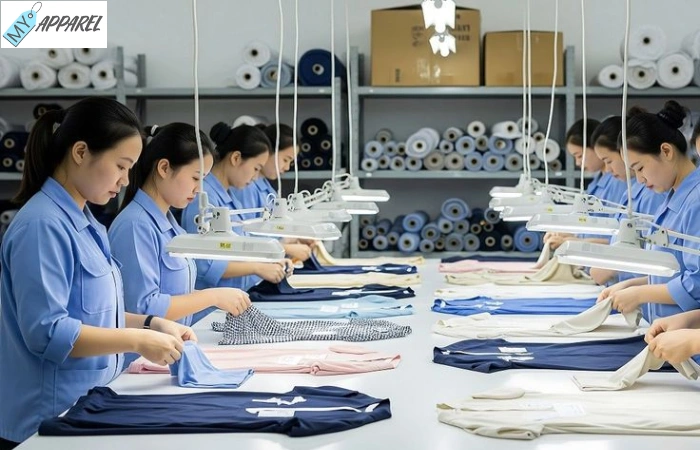
4. Fabric Cutting Process
After sample approval, fabric is layered and cut using manual or automated machines. Precision cutting ensures minimal waste and consistent sizing.
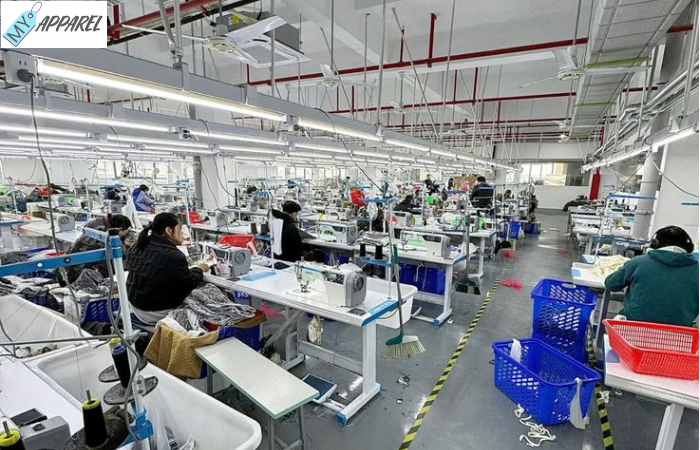
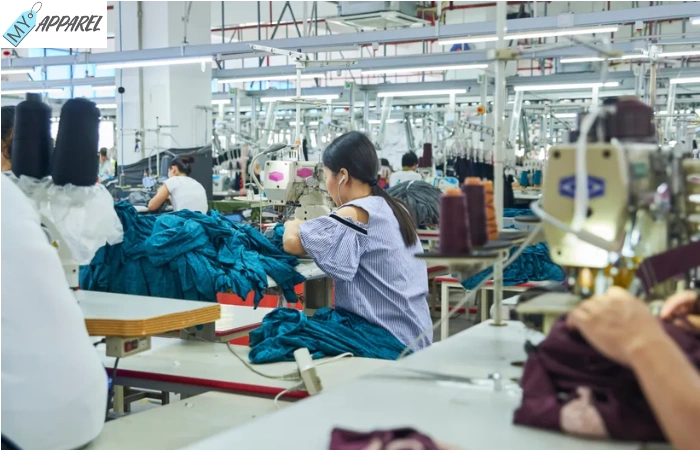
5. Sewing and Assembly
In the cut and sew manufacturing process, garment panels are stitched together by skilled operators using industrial machines. This stage defines garment durability and finish.
6. Garment Manufacturing Stages
Typical garment manufacturing stages include:
- Stitching
- Trimming
- Washing (if required)
- Ironing and finishing
Garment Quality Control Process
Quality control is essential in clothing factory operations. Factories perform inspections at multiple stages:
- Fabric inspection
- In-line production checks
- Final quality audits
The garment quality control process ensures compliance with brand standards and export regulations.
Apparel Production Timeline & Workflow
The clothing manufacturing timeline varies based on order size and complexity:
- Sampling: 7–14 days
- Bulk production: 20–45 days
- Final inspection & packing: 3–7 days
Efficient apparel production cycles help brands plan launches and inventory.
OEM, ODM & Private Label Manufacturing
China offers multiple production models:
- OEM garment manufacturer China – brand provides designs
- ODM clothing manufacturer China – factory provides design + production
- Private label clothing manufacturer China – ready designs with branding
These options support startups and established brands alike.
OEM, ODM & Private Label Manufacturing
China offers multiple production models:
- OEM garment manufacturer China – brand provides designs
- ODM clothing manufacturer China – factory provides design + production
- Private label clothing manufacturer China – ready designs with branding
These options support startups and established brands alike.
Clothing Manufacturing Costs in China
Key factors affecting clothing manufacturing cost in China include:
- Fabric type and quality
- Order quantity (MOQ)
- Customization (printing, embroidery)
- Packaging and labeling
- Labor and compliance standards
Understanding apparel manufacturing cost breakdowns helps brands manage budgets effectively.
Apparel Supply Chain & Export Process
China’s strong apparel supply chain supports:
- Bulk clothing manufacturing
- Made-to-order apparel
- Wholesale garment exports
Factories handle labeling, packing, and compliance for clothing export from China, ensuring smooth international shipping.
Why Brands Choose MY APPAREL MANUFACTURER
At MY APPAREL MANUFACTURER, we simplify clothing manufacturing in China by offering:
- Transparent production workflows
- Reliable fabric sourcing
- Scalable bulk production
- Support for startups and global brands
We focus on efficiency, quality, and long-term partnerships.
Why Brands Choose MY APPAREL MANUFACTURER
At MY APPAREL MANUFACTURER, we simplify clothing manufacturing in China by offering:
- Transparent production workflows
- Reliable fabric sourcing
- Scalable bulk production
- Support for startups and global brands
We focus on efficiency, quality, and long-term partnerships.
Conclusion
Understanding how clothing factories work in China empowers brands to make informed sourcing decisions. From fabric selection to final export, the garment manufacturing process in China is structured, scalable, and cost-effective when managed correctly.
With the right manufacturing partner, brands can confidently navigate production, control costs, and scale globally.