

Scaling Clothing Production is the point at which most founders of clothing brands have dreamed. It is an indication that the hard work is paying off. People are buying. It is a real brand.
However, scaling at the wrong time or for the wrong reasons is one of the most common ways promising clothing brands find themselves in financial trouble.
Order too much, too soon, and you are left with unsold merchandise that could have been used for marketing, development, and operations. Order too little, and you are left with disappointed customers, lost retail sales, and stalled momentum that you worked so hard to achieve.
The question of whether or not to scale is more than a matter of confidence in your brand. It is a question of interpreting very specific, very concrete signs that your business is actually ready to scale, from an operational, financial, and demand perspective, to handle increased production volumes.
This article will take you through the signs that it is time to scale, the questions you must answer before scaling, and the steps to ensure that a scale-up goes smoothly rather than sideways.
What “Scaling Clothing Production” Actually Means
Before diving into the symptoms, it might be helpful to define what scaling production looks like, because it’s not just an issue of wanting more of them.
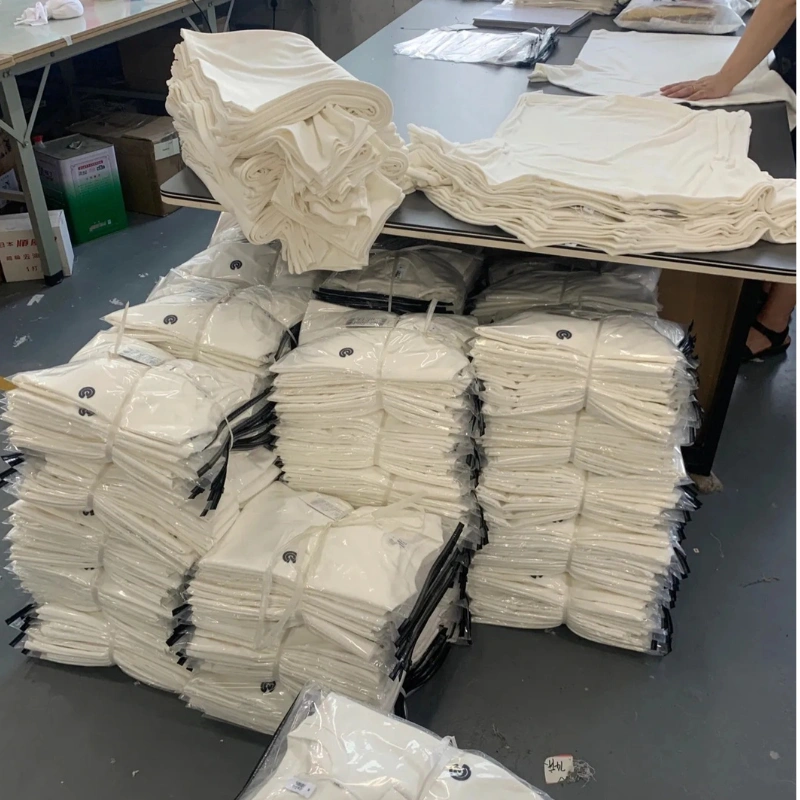
Scaling means being willing to commit to higher volumes with your manufacturer, which typically means bigger deposits, bigger runs, and bigger inventory. It might mean negotiating new MOQs and pricing levels. It might mean going from one colorway to multiple, from one style to multiple, from one production run a year to multiple.
If scaling is done correctly, it helps lower your cost per unit, increase your margin, and provide you the depth you need to grow your distribution. If scaling is done incorrectly, it leads to a cash flow problem, and it takes years to recover from it. It might take years, and if you’re lucky, your brand might still be alive at the end of it.
The signs below are the ones that, taken together, indicate your brand is genuinely ready for that next step.
Sign 1: You’re Consistently Selling Out Before You Want To
Selling out sounds like a great problem to have. And in the early days, it validates demand, creates urgency, and builds a waitlist of interested buyers.
But if you’re selling out consistently across multiple drops, multiple seasons, or multiple styles — and the sell-through is happening faster than your restock can keep pace — that’s not a marketing tactic anymore. That’s a supply constraint that’s actively costing you revenue.
The keyword is consistently. One sold-out drop could be a well-executed launch moment. Three or four consecutive drops where you’re out of stock within days, across different products, is a demand signal that warrants a production response.
Before scaling based on this, ask: Are you selling out because demand is genuinely high, or because you’ve been ordering conservatively out of caution? Both can look similar from the outside. If you’ve been deliberately holding inventory low to reduce risk, scaling up may just mean ordering what you should have been ordering all along.
Sign 2: Your Sell-Through Rate Is High and Predictable
Sell-through rate — the percentage of your inventory sold within a defined period — is one of the most useful metrics a clothing brand has.
If you’re consistently selling 80–90% or more of your inventory within your target window, you have two things that justify scaling: proof of demand and a baseline for forecasting. You know roughly how much product you can move in a season. That makes larger orders a calculated bet rather than a guess.
The dangerous scenario is scaling based on optimism rather than data. “Our last drop sold well, so the next one will sell more” is not a forecast — it’s a hope. The signal to take action on is a pattern of strong sell-through across multiple runs.
Units sold per style per period, days to sell out per product, and percentage of inventory remaining at the end of each season are what to track. If those numbers are strong and stable, then you have a basis from which to scale.
Sign 3: You Have Repeat Customers
New customer acquisition is expensive. Repeat customers are the most reliable indicator that your product and brand have genuine staying power.
When a meaningful percentage of your sales are coming from people who’ve bought from you before — and those customers are buying again without being heavily incentivized with discounts — it tells you something important: the product lives up to the marketing. It holds up after washing. The fit is consistent. The customer experience was good enough to bring them back.
Scaling production for a brand with strong repeat purchase behavior is a fundamentally different risk profile than scaling for a brand that’s still figuring out how to get first-time buyers.
What to look for: A repeat purchase rate that’s growing over time, positive organic reviews citing product quality, and customers who tag or recommend your brand unprompted on social media.
Sign 4: Wholesale or Retail Buyers Are Coming to You
When boutiques, specialty retailers, or online marketplaces start reaching out about carrying your product — rather than you pitching them — your brand has crossed a meaningful threshold.
Wholesale and retail distribution require inventory depth that direct-to-consumer drops don’t. A retailer placing a 200-unit order across five styles needs to know you can deliver reliably, restock when they sell through, and maintain consistent quality across production runs. That’s not possible if you’re producing 100 units of a style once and moving on.
If wholesale interest is arriving and you can’t service it because your production volumes are too small, you’re leaving revenue on the table and potentially missing a distribution partnership that could change your brand’s trajectory.
Inbound wholesale interest is one of the clearest external signals that scaling is commercially justified.
Sign 5: Your Unit Economics Are Working
This is the one that gets skipped most often, and it’s the most important.
Before you scale, you need to know — with actual numbers, not estimates — that your business makes money at current volume, and that it makes more money per unit as volume increases.
Scaling a brand that isn’t yet profitable at small volumes usually just produces bigger losses faster. Increasing your volumes can help you lower your cost of manufacture per unit, but if your margin issues are due to pricing, customer acquisition, or returns, these won’t necessarily improve with increased volumes.
Crunch the numbers. What is your gross margin per unit at your current volumes? What is your gross margin at the volumes you’re contemplating? What is your customer acquisition cost compared to your average order size? Are you profitable, or are you funding your operations through debt or equity that you need to service?
The minimum to confirm: You’re selling at a price that covers COGS, marketing, shipping, returns, and overhead — and leaves something over. If that’s true at the current volume, scaling is about growth. If it’s not yet true, scaling is about hoping volume solves a structural problem; it usually doesn’t.
Sign 6: Your Manufacturer Can Grow With You
The best demand signals in the world don’t help if your current manufacturer can’t handle larger orders without compromising the quality or consistency you’ve built your brand on.
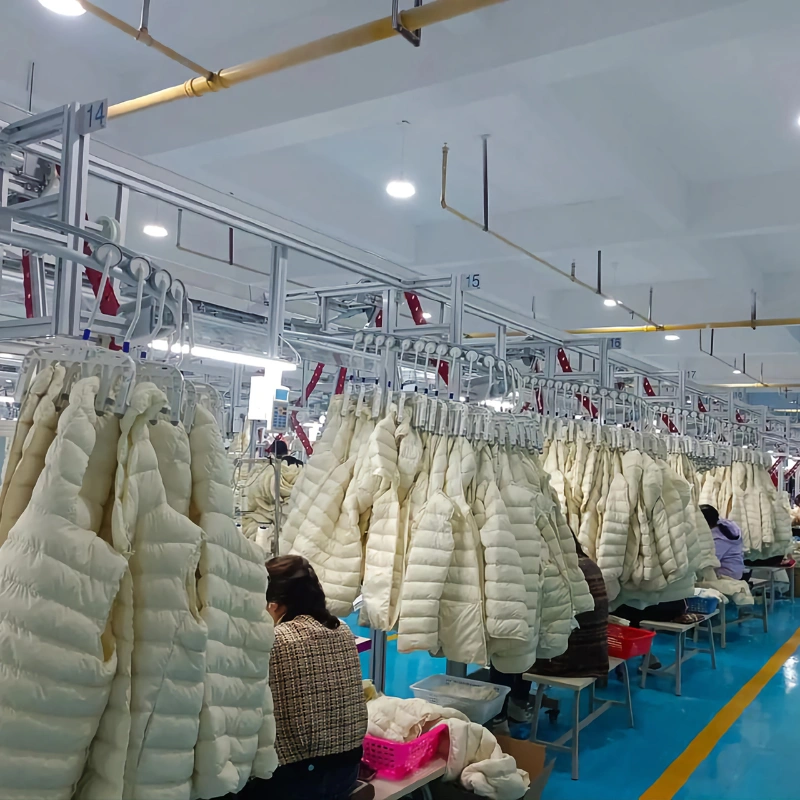
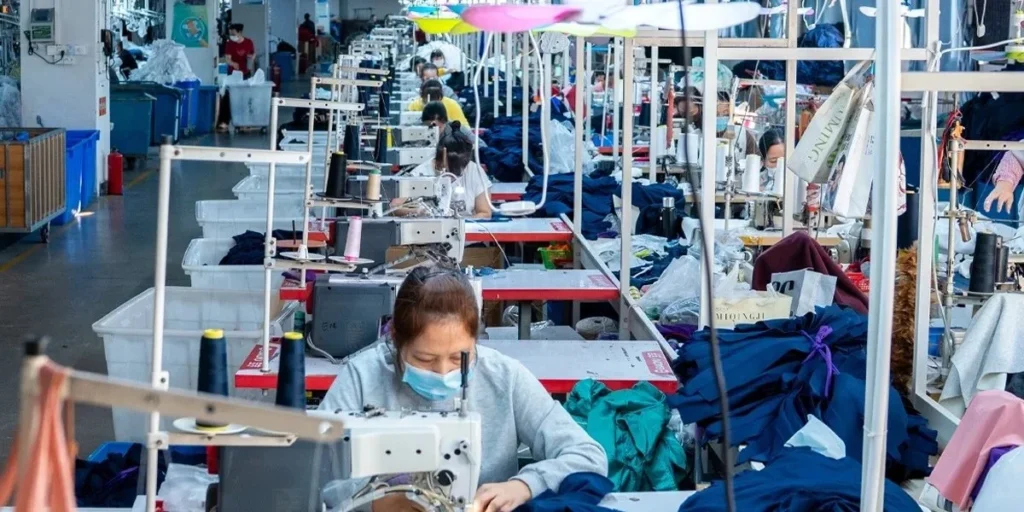
Before committing to a scale-up, have an honest conversation with your manufacturer about capacity. Can they handle your projected volumes within your needed lead time? Do they have the production lines to run larger orders in a single run, or will your order be split across multiple batches that could introduce consistency issues? Are their fabric suppliers able to fulfill larger orders of your specific materials?
Scaling is also a moment to renegotiate pricing. Most manufacturers offer better per-unit pricing at higher volumes — but only if you ask, and only if the volume justifies it. Know what pricing tiers your factory offers and what volume thresholds unlock them.
If your current manufacturer can’t support your growth plans reliably, it’s better to find out during planning than after you’ve committed to orders you can’t fulfill.
Sign 7: You Have the Cash Flow to Fund Larger Orders
Manufacturing payment terms require capital up front. A 30–50% deposit before production starts, with the balance before shipment — on a significantly larger order — means your cash needs increase substantially before the revenue from that order comes in.
Map out the cash flow timeline before committing: when is your deposit due? When is the final payment? When does inventory arrive? How long after arrival does it take to sell through? How much working capital do you need to bridge those gaps?
Brands that scale too fast without adequate working capital end up in a painful position: inventory on order they can’t fully pay for, or inventory that’s arrived but can’t be moved quickly enough to fund the next production cycle.
If the cash flow math doesn’t work without taking on significant debt or diluting equity, consider a more gradual scale — stepping up production by 40–60% rather than doubling or tripling at once.
Sign 8: Your Operations Can Handle the Volume
More inventory means more to manage — warehousing, fulfillment, customer service, returns processing, and reorder tracking. These are operational realities that don’t scale automatically with production volume.
Before you scale, ask honestly whether your current operations infrastructure can handle the increase. If you’re fulfilling orders yourself from a spare room, doubling production might mean doubling a workflow that’s already at its limit. If your customer service response time is already stretched, more orders will make it worse before it gets better.
Scaling production without scaling operations creates a customer experience problem at exactly the moment when you want to be converting new buyers into loyal ones.
What to assess: Fulfillment capacity per day, storage space, returns handling process, and whether your current team — or you personally — can absorb higher order volume without service quality degrading.
How to Scale Gradually Rather Than All at Once
For most brands, the smartest approach to scaling is incremental. Rather than doubling production in one step, increase by 40–60% and use the results of that run to inform the next increase.
This approach lets you validate that sell-through rates hold at higher volume, that your manufacturer maintains quality consistency at larger scale, that your operations can handle the increase, and that your cash flow survives the growth cycle.
It also means your downside is limited if something in the equation turns out to be different at scale than it was at smaller volumes.
The brands that scale successfully tend to be the ones that treat each production increase as an experiment with a defined hypothesis: “We believe we can sell X units of this style in Y weeks because of Z data.” When the hypothesis proves out, the next step up is lower risk.
A Note on Scaling Before You’re Ready
It’s worth being direct about what happens when brands scale too early.
Cash gets tied up in inventory that doesn’t move as fast as projected. The pressure to generate revenue pushes toward discounting, which trains customers to wait for sales and erodes the brand’s pricing integrity. Operating costs continue while revenue growth stalls. Founders who entered the business with enthusiasm find themselves managing a cash flow crisis instead of building a brand.
This isn’t a rare outcome. It’s one of the most common ways well-made, well-positioned clothing brands stall out. The product was good. The brand had real customers. The mistake was betting on growth before the data fully supported it.
Scale when the signals are there. Not when you’re ready for it to be time.
Working with My Apparel Manufacturer
When your brand is ready to scale, the relationship with your manufacturer becomes even more important than it was at launch.
At My Apparel Manufacturer, we work with clothing brands across the USA, UK, Europe, and Australia at every stage of growth — from founders placing their first low MOQ order to established labels scaling into multi-thousand unit runs. We offer transparent pricing tiers at higher volumes, consistent quality across production runs, and the capacity planning conversations that brands need before they commit to larger orders.
If you’re approaching the point where scaling feels like the right next move, we’d welcome a conversation about what that looks like practically — timelines, volumes, pricing, and capacity.
FAQs