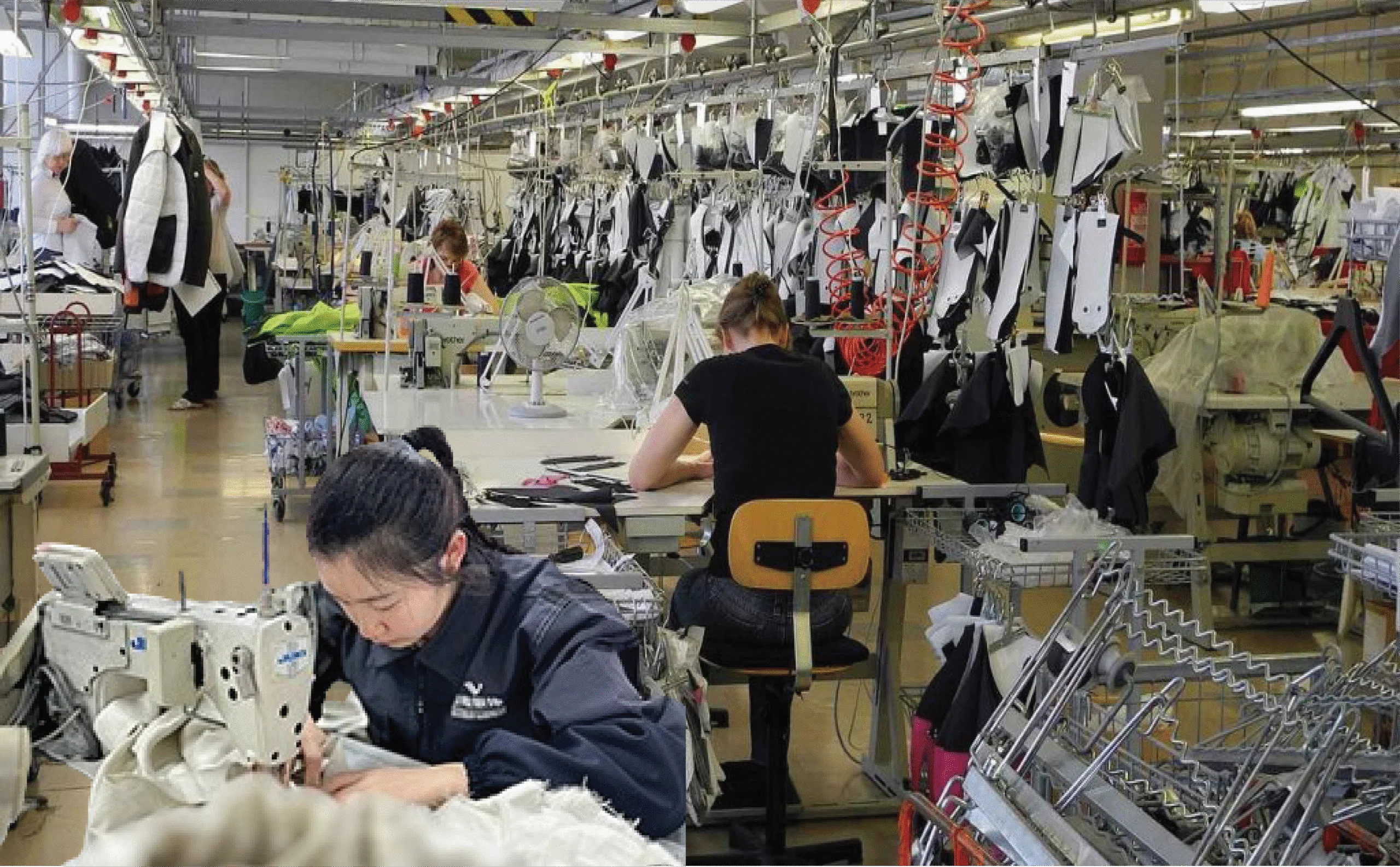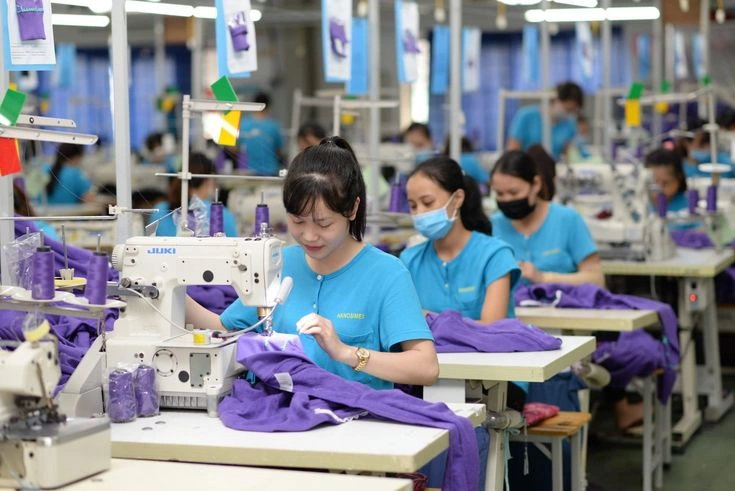


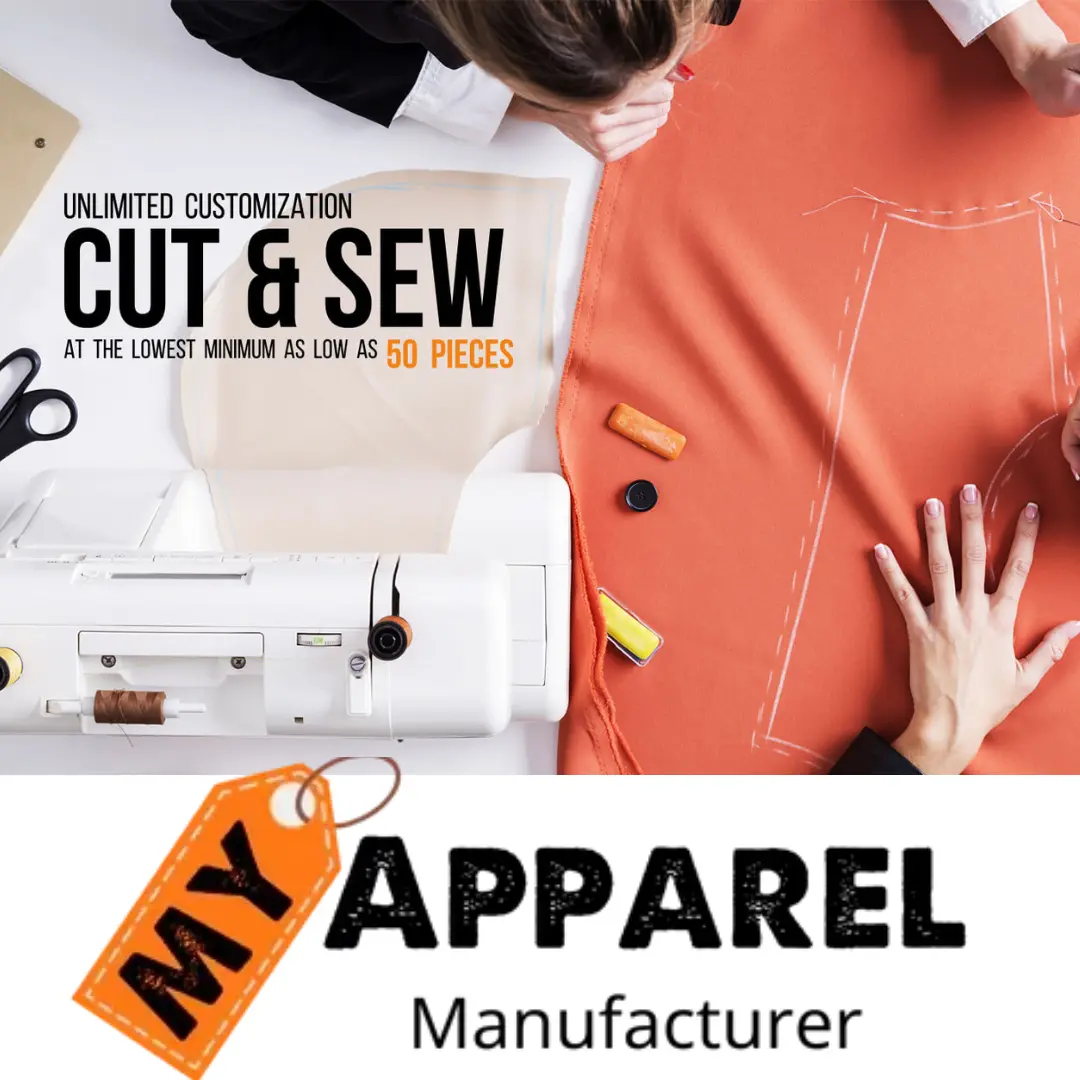
One of the basic and conventional techniques of garment manufacturing is cut and sew technique. As the name indicates the fabric is cut to patterns and then sewn together in sections. Unlike mass-produced, fully automated systems, cut and sew allows for more craftsmanship, control, and customization essential for fashion brands looking for unique fits and details.
What Does “Cut and Sew” Mean?
In the clothing and textile industry, cut and sew is the process of creating clothing from raw material pieces that are cut and sewn at the same manufacturing plant or place. This is in contrast to simpler processes such as tagless printing or sublimation. Cut-And-Sew is often used by a brand for products like hoodies, denims, swimwear, unisex clothing, and bras, where handling and/or assembly of the fabric is important.

Step-by-Step Cut- and- Sew Process
Below is a detailed breakdown of how cut and sew manufacturing works from start to finish:
1. Design & Pattern Making
- Create technical sketches and size templates.
- Use specialized pattern-making tools to produce cut templates in various sizes.
2. Fabric Selection & Preparing
- Select the right materials (e.g., knit fabric for hoodies, swimwear cloth).
- Lay out fabric on the cutting table.
3. Cutting
- Use manual or automated cutting tools to follow the pattern outlines.
- Cut all pieces needed: front, back, sleeves, waistbands, pocket panels, quilt panels, etc.
4. Sorting & Bundling
- Organize fabric pieces by size, color, or design.
- Bundle pieces together to streamline production flow.
5. Sewing
- Skilled workers assemble bundles at sewing stations.
- Multiple machines may be used: flatbed, overlock, coverstitch, buttonhole, etc.
- For example, switch between fabrics like jersey, quilted cotton, or swimwear cloth depending on the garment.

6. Quality Control
- Inspect seam finishes, alignments, durability, and look for defects.
7. Pressing & Finishing
- Press garments, trim loose threads, trim foam inserts (for bras), and add tags.
8. Packaging
- Fold, bag, box, and label garments, ready for shipping or retail.
Why Choose Cut- And Sew?
Full Design Flexibility
Suitable for custom pieces like cut- and sew hoodies, cut and sew jeans, or swimwear. Choose fabrics, prints, foam inserts (e.g., cut and sew bra foam), and trims with control.
Better Quality Control
Pieces are cut and sewn under the same roof, reducing errors and improving crafting consistency—ideal for branded clothing.
Perfect for Small-Batch Clothing Brands
Brands can benefit from using local cut and sew studio services in cities like Pittsburgh or Teaneck without needing huge volumes.

Global Fabric Sourcing
Fabrics may be sourced in the U.S., Asia, or Europe and brought to cut and sew clothing manufacturers, as seen in places like Orange County or Bali swimwear factories.
Real-World ‘Cut and Sew’ Examples
- Cut & Sew Hoodies or Jeans – Ideal for streetwear brands needing unique silhouettes and detail work.
- Cut & Sew Swimwear – Requires specialized fabrics (e.g., from swimwear clothing factory in Bali) and precision sewing.
- Cut & Sew Quilts – For bedding brands, which need durability and crafted uniformity in quilting.
- Cut & Sew Bras – This includes foam lining, shaping, and reinforced seam work.
- Cut & Sew Activewear or Knits – Uses stretch fabrics, flatlock seams, and often complex paneling.
Choosing the Right Cut and Sew Manufacturer
When looking for a cut and sew partner, consider:
- Location & Specialty
- Do you need activewear fabrics, quilting, or swimwear materials?
- Are local MOQ or customs key for your brand?
- Quality Standards
- Ask for samples for stitching, foam inserts (bras), and press finishes.
- Minimum Quantities
- Some studios offer 50–100 unit batches; others require larger loads. For example, certain Bali swimwear facilities may specialize in mid-size volumes.
- Technology Use
- Do they use auto-cut machines? CAD-designed patterns?
- Cost & Lead Time
- Cutting and sewing manually may cost more but offer better control and quality.
- Quick sampling: 1–2 weeks; mass production: 4–8 weeks depending on complexity.

Cut and Sew vs. Fully Fashioned/Blank Production
| Aspect | Cut & Sew | Fully Fashioned / Blanks |
| Design Freedom | High – custom panels and styles | Low – pre-sewn fabric pieces |
| Cost per Unit | Higher for small batches | Lower for large volumes |
| Quality Control | Full oversight in your facility | Opaque—fabric pre-made by others |
| MOQ Flexibility | Studio-level flexibility available | Large batch MOQ typically required |
Tips for Brands Using Cut and Sew
- Use Templates and Markers
Cut and sew manufacturers often create layout markers to maximize fabric usage and reduce waste. - Plan for Trims & Finishing
You may need to supply buttons, labels, foam lining, or special fabrics (like quilted panels). - Request Pre/Post-Cut Samples
Review fabric swatches and mini-cut samples before full cut run. - Invest in Quality Control
Hire QC during final sewing or press steps to catch seam flaws or miscuts. - Scale With Confidence
Many studios offer modular growth: “cut & sew near me” can evolve into larger factory production.
Final Thoughts
Cut and sew clothing manufacturing is perfect for brands that value quality, customization, and design control. Whether you’re launching hoodies, swimwear, or custom bras, this method gives you craftsmanship, unique style, and the freedom to build a brand that stands out.
By understanding the full process—from pattern making and layout cutting to sewing, pressing, and finishing—you can effectively partner with the right cut and sew manufacturer, whether it’s a boutique studio, swimwear factory in Bali, or large garment facility in the U.S. or UK.