

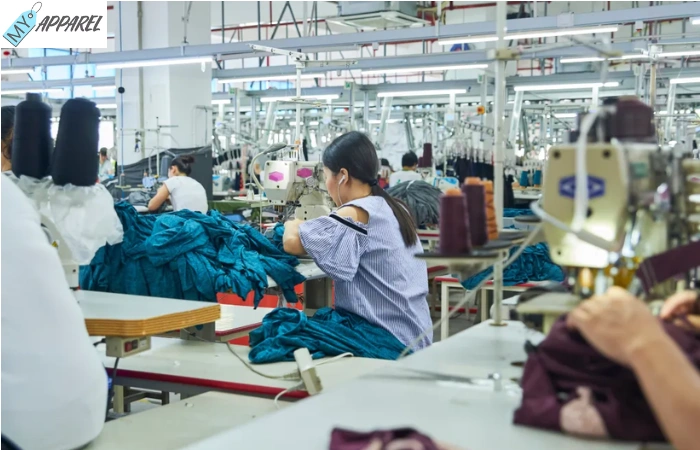
The clothing sampling process is one of the most important stages in apparel manufacturing. Before any garment goes into mass production, it must pass through multiple sampling steps to ensure that design, fit, fabric, and construction are correct.
For global fashion brands, startups, and sourcing companies, sampling is not optional—it is a critical quality control system that protects them from costly production mistakes.
In simple terms, the clothing sampling process is where a design idea becomes a real physical garment, tested and refined before bulk manufacturing begins.
Manufacturers like My Apparel Manufacturer rely heavily on this stage and follow a structured apparel sample policy to ensure production accuracy and global quality standards.
What is the clothing sampling process??
The clothing sampling process refers to the creation of prototype garments before mass production.
A sample is basically a “trial version” of your clothing design that helps evaluate:
- Fit and sizing accuracy
- Fabric performance
- Stitching quality
- Construction methods
- Design execution
It is the step where imagination becomes reality.
A clothing sample is not just a garment—it is a test of your entire production system.

Why Clothing Sampling is Important in Fashion Manufacturing
Many brands underestimate sampling, but experienced manufacturers know it is the most critical step.
Here’s why:
1. Prevents Costly Production Errors
Small mistakes in sampling become large financial losses in bulk production.
2. Ensures Proper Fit
Fit issues are the number one reason for product returns.
3. Improves Product Quality
Sampling helps refine stitching, fabric behavior, and garment structure.
4. Builds Brand Trust
Consistent quality increases customer satisfaction and repeat purchases.
5. Reduces Production Risk
Factories can identify issues early before mass production begins.
Step 1: Design Concept Development
Everything begins with an idea.
Designers usually start with:
- Sketches
- Inspiration boards
- Trend analysis
- Brand identity direction
At this stage, creativity is free. But it must be structured into technical instructions before moving forward.
The goal is simple:
Turn imagination into a manufacturable concept.
Step 2: Tech Pack Creation (Factory Blueprint)
The tech pack is the most important document in apparel manufacturing.
It includes:
- Technical sketches (front, back, side)
- Measurement charts
- Fabric specifications
- Stitching instructions
- Color codes (Pantone references)
- Label and trim details
“Without a tech pack, production becomes guesswork.”
Factories use the tech pack as a blueprint to build the first sample accurately.
A strong tech pack reduces the following:
- Miscommunication
- Sampling errors
- Production delays
Step 3: Pattern Making Process
Pattern making is where design becomes structure.
A pattern is a template used to cut fabric pieces.
Pattern makers:
- Convert sketches into technical templates
- Define garment shape
- Adjust sizing proportions
- Ensure balance and symmetry
Even a 1 cm mistake can change how a garment fits completely.
This step is highly technical and often done using CAD software in modern factories.
Step 4: Proto Sample Development
The proto sample is the first physical version of the garment.
At this stage:
- Fabric may not be final
- Colors may not be correct
- Focus is on structure and design
The purpose is to check:
- Does the design work in real life?
- Is the construction feasible?
- Does the garment look as expected?
This is the first moment when ideas become physical reality.
Step 5: Fit Sample Evaluation & Revisions
Fit is one of the most important parts of fashion.
The fit sample is tested on:
- Body model or mannequin
- Standard size charts
- Movement and comfort
Brands evaluate:
- Sleeve length
- Shoulder fit
- Waist balance
- Overall proportion
Adjustments are made and samples are revised until fit is perfect.
This stage may repeat multiple times.
Step 6: Fabric & Trim Selection Finalization
After fit approval, materials are finalised:
- Main fabric
- Lining materials
- Buttons and zippers
- Threads
- Labels and tags
Factories ensure materials meet quality standards, such as:
This ensures safety, durability, and consistency.

Step 7: Pre-Production Sample (PP Sample)
The PP sample is the final approval sample before bulk production.
It includes:
- Final fabric
- Final trims
- Correct measurements
- Approved stitching
- Final finishing
“The PP sample is the final agreement between brand and factory.”
Once approved, production begins using this sample as a reference.
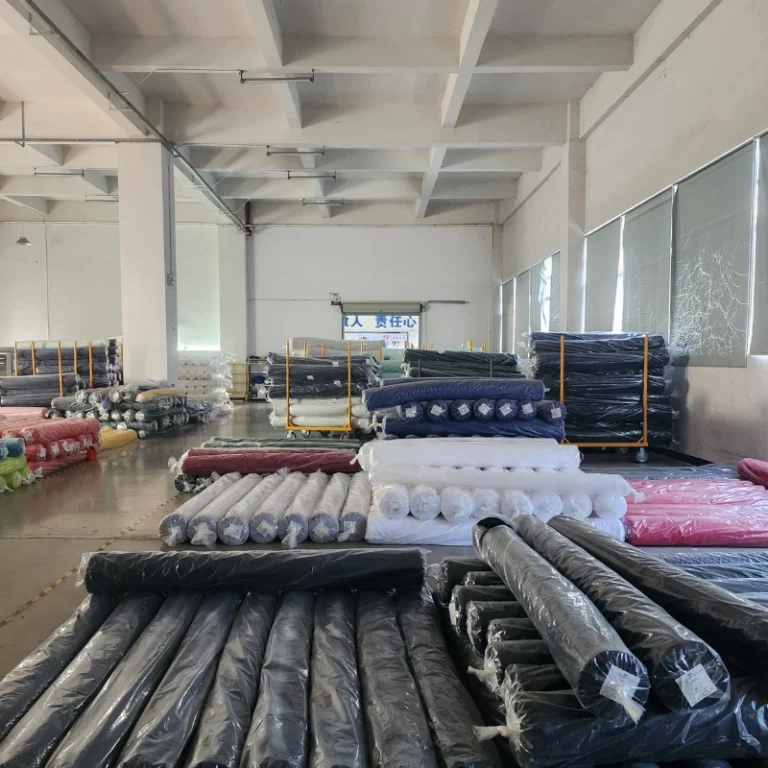
Step 8: Bulk Production Workflow
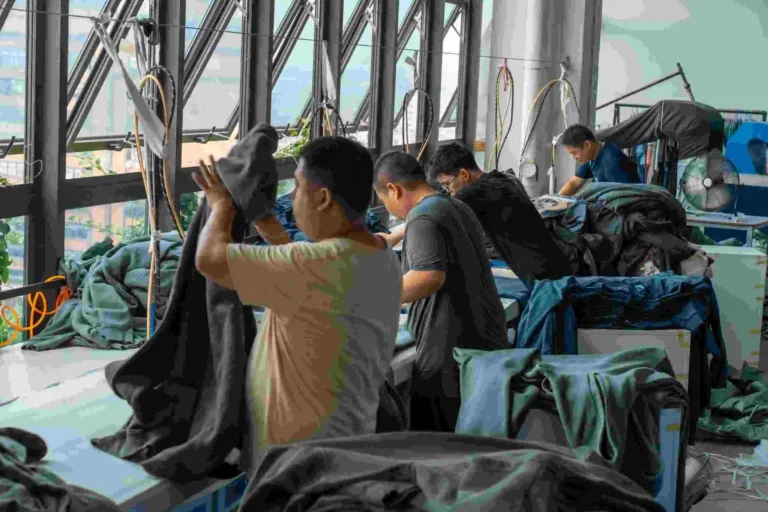
After PP approval, factories move to mass production:
- Fabric cutting in bulk
- Sewing line production
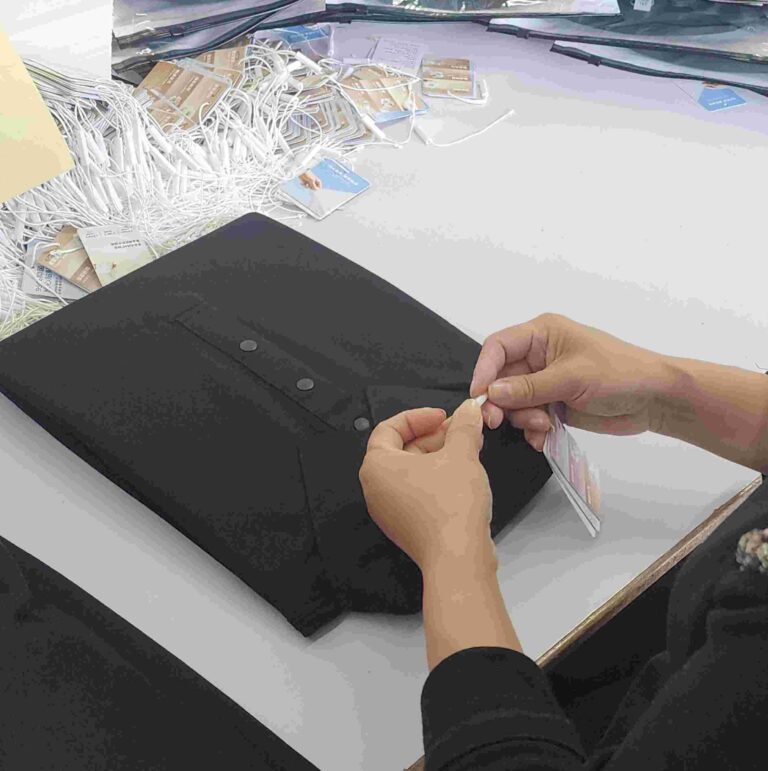
- Assembly and finishing
- Ironing and packaging
This stage requires strict control to ensure consistency across thousands of pieces.

Step 9: Quality Control in Real Factory Production
Quality control is active throughout production:
Factories perform:
- Inline inspection (during sewing)
- Mid-production checks
- Final inspection
They check:
- Stitch strength
- Size accuracy
- Fabric defects
- Color matching
- Label correctness
This ensures defect-free garments reach customers.
Real Manufacturing Insights (What Factories Actually Do)
In real production environments, sampling is treated very seriously.
Experienced factory managers often say:
- “Sampling saves more money than production earns.”
- “Most production mistakes come from unclear tech packs.”
- “A perfect sample guarantees smoother bulk production.”
In reality:
- 70% of production problems are solved during sampling
- 90% of returns are caused by skipped or rushed sampling
That is why professional clothing manufacturers like My Apparel Manufacturer treat sampling as engineering, not just design work.
Expert Quotes on Clothing Sampling
Sampling is where design meets engineering.
A garment is only as good as its approved sample.
If sampling is perfect, production becomes predictable.
Every great fashion brand is built on strong sampling systems.
Common Mistakes Brands Make
Many brands fail because of:
- Poor tech packs
- Rushing sampling stages
- Ignoring fabric testing
- Skipping fit corrections
- Weak communication with factory
These mistakes often lead to:
- Production delays
- High defect rates
- Customer complaints
- Financial loss
Final Thoughts
The clothing sampling process is the backbone of apparel manufacturing. It ensures that every design is tested, refined, and perfected before entering mass production.
From concept to PP sample, every stage plays a critical role in delivering high-quality garments.
For global fashion brands, sampling is not just a step—it is a quality guarantee system that protects both brand reputation and customer satisfaction.
When done properly, sampling turns uncertainty into confidence and ideas into real products.
10-Minute Expert Insights on Clothing Sampling Process
The clothing sampling process is where real manufacturing discipline begins, because a garment is never truly made in bulk production—it is perfected during sampling. This is the stage where mistakes don’t become losses but instead turn into valuable lessons that improve the final product. In fact, experienced factories often say they don’t fear production; they fear unclear tech packs, because unclear instructions always lead to confusion and rework. A perfect sample at the right stage can save thousands of dollars in future production errors, proving that design is not just creativity, but true engineering in action.
Every successful clothing brand is built on controlled sampling cycles, where each detail is tested, corrected, and refined before scaling. Bulk production itself does not fix mistakes—it only multiplies them across thousands of pieces. That’s why fit approval is often considered more important than design approval in real manufacturing, because fit defines how the customer experiences the garment. In this process, sampling is never a delay; it is protection against failure. And most importantly, if the PP sample is wrong, everything that follows in production will also be wrong, making sampling the most critical checkpoint in the entire apparel manufacturing journey.
FAQS